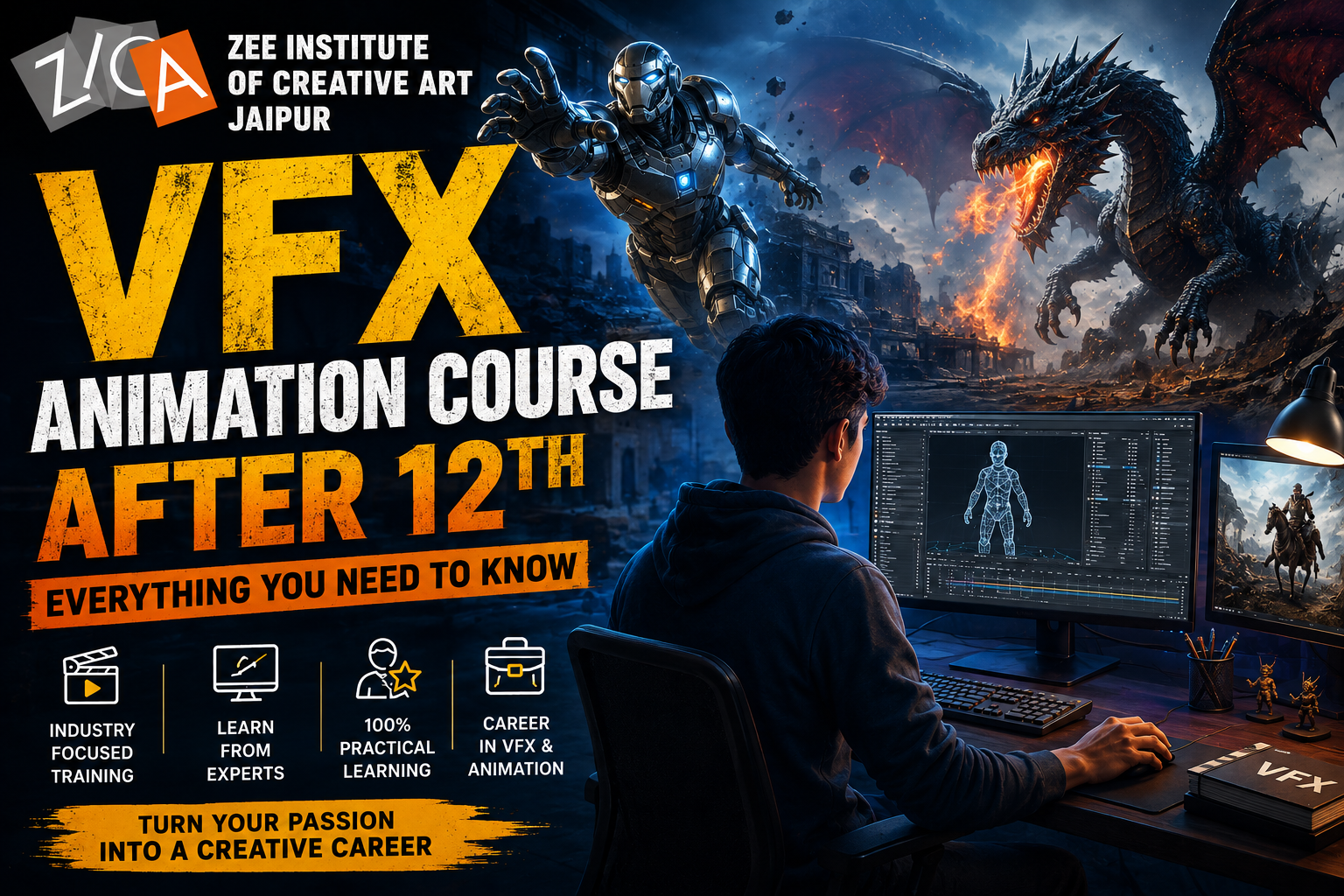
VFX Animation Course After 12th: Everything You Need to Know
Done with 12th grade? Not sure what’s next, especially if you’re the creative type? A VFX animation course might be worth a look. Games, movies, visual effects, animation, and digital storytelling—if any of that excites you, this field could be for you.
This field is about one thing mainly: mixing creativity with technology. You animate characters. You build film-like effects. But before picking a program, know a few things first. The eligibility requirements. The skills you’ll need. The syllabus. The job opportunities. And how much hands-on training you’ll actually get.
Why Choose a VFX Animation Course After 12th?
A VFX animation course turns your ideas into real, professional visual work. Entertainment and digital media companies use visual effects and animation everywhere. Ads. Films. Games. TV. Online content too.
Here’s what you can dig into:
- 3D and 2D animation
- Visual effects
- 3D modelling
- Character design
- Motion graphics
- Compositing
- Lighting and rendering
- Video production
Art and technology: if both excite you, this path is worth exploring.
Who Can Join a VFX Animation Course After 12th?
Good news here. Students from all kinds of backgrounds can get into animation and VFX. No specific stream needed. No fixed subject combo.
Generally, anyone who’s finished 12th can look for courses based on that institute’s own eligibility rules.
What matters more is this:
- Innovative thinking
- A fascination with visual storytelling
- Basic computer skills
- Willingness to learn new software
- Patience to work with precision and creativity
- Genuine interest in animation or filmmaking
You don’t need to be a trained artist to start. Practice does the rest.
What Will You Learn in a VFX Animation Course?
A well-structured VFX animation course mixes theory with real, hands-on work. Depending on the course level and curriculum, you pick up a mix of creative and technical skills.
Key areas you’ll explore:
Animation: timing, character movement, character animation, and storytelling.
Visual Effects: how effects get created and then used within scenes.
3D Design: modelling, lighting, texturing, rendering.
Compositing: how visual and audio elements come together in one scene.
Motion Graphics: animated visuals for ads, videos, and digital content.
Practical projects help the most. They show you how classroom concepts apply to real creative work.
How to Choose the Right VFX Animation Course?
Plenty of courses claim to offer the same thing. Most don’t. Before you register anywhere, compare the curriculum. Compare the faculty’s training approach. Compare the projects. Compare the career guidance too.
Look for:
- Updated course content
- Practical assignments
- Industry-focused training
- Portfolio development
- Expert trainers
- Hands-on software learning
- Career guidance
A sturdy portfolio matters just as much as your certificates when you practice for work later.
What Careers Can You Explore After the Course?
Once you finish a VFX animation course, distinctive creative roles open up. Which one suits relies upon for your abilities and your area of interest.
Career options could include:
- VFX artist
- 3D artist
- Animator
- Motion graphics designer
- Compositor
- 3D modeler
- Character artist
Professional video production
Figure out which part of animation or VFX excites you the most. Your career direction becomes clearer from there.
Start Your Creative Journey After Twelfth
Picking a VFX animation course after 12th grade may be a tremendous launchpad. Especially if you want a career in games, animation, VFX, or virtual media. Look closely at the curriculum.
Check the practical training. Check the portfolio support and career guidance too, before you commit. Check out Zica Jaipur and follow us on Facebook, YouTube, and Instagram for updates, tips, and student work to learn more about your next step.
Frequently Asked Questions
1. Can I join a VFX animation course after 12th?
Yes. Students who’ve finished 12th can join suitable VFX and animation courses, based on the institute’s eligibility requirements.
2. Is drawing necessary for learning VFX and animation?
Not really. Advanced drawing skills aren’t a must. Creativity, practice, visual thinking, and a genuine willingness to learn matter more.
3. What will I learn in a VFX Animation Course?
You’ll likely cover animation, 3D modelling, visual effects, compositing, motion graphics, lighting, rendering, and other creative skills.
4. What jobs can I get after a VFX animation course?
You can explore roles such as VFX artist, animator, 3D artist, compositor, motion graphics designer, and 3D modeller.
5. How can I get more information about the course?
You can contact Zica Jaipur at +91 91520 10818 to learn about course details, eligibility, training, and admission options.